📅 Fridays are the most common day for job quotes to be submitted ☕️ Tradies are 2nd biggest early coffee buyers in Aus after nurses 🚗 The top excuse tradies give for being late? “Traffic” - even on Sunday jobs 🚿 Plumbers and sparkies are the top trades for starting their own business 👷 Thousands of tradies use Tradiespace 🔒 44% of tradies say tool theft has affected them in the past 5 years 🧾 64% of tradies say quoting is their top admin pain 🛍️ Friday is the most popular day for tradies to buy gear and tools ⏰ 6:30am is the most common start time for Aussie tradies 🐶 11% of tradies bring their dog to work weekly 🧰 The average ute holds $38K worth of tools 🥶 Tradies are the second-highest consumers of iced coffee in Australia, right after long-haul truck drivers 🔧 82% of tradies buy tools based on mate recommendations 🚽 Tradies rank site portaloos as the #1 worst part of the job 🇦🇺 Australia has over 1.1 million tradies - nearly 1 in 10 working Aussies ⚡ Electricians spend more annually on tools than any other trade 📱 1 in 3 tradies has used a level app on their phone, and still didn’t trust it 🍽 Nearly half of tradies say they’ve eaten smoko with tools as a spoon 🚶♂️ The average tradie walks more in a day than an office worker does in a week 📏 The most lost item on-site? Tape measures 📦 Over 60% of tradies are self-employed or run their own business 🎥 Over 60% of tradies say they’ve used YouTube to learn a new skill or technique 🛒 1 in 4 tradies now prefers to buy tools online instead of in-store 🛠️ Tradies spend on average 12+ hrs/month researching tools 💰 The average Aussie tradie spends over $14,000 per year on tools, workwear and gear

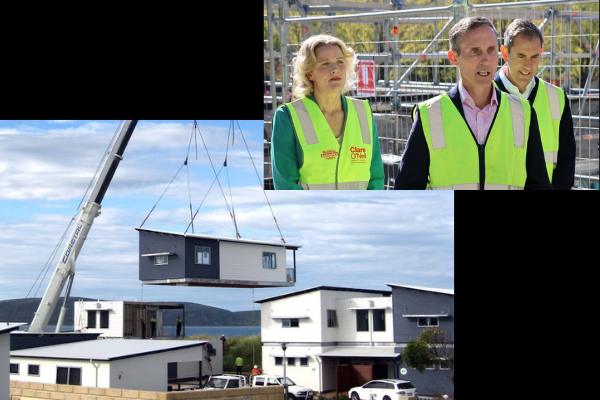
Australia builds around half as many homes per construction worker as it did 30 years ago, according to the Productivity Commission. Now Assistant Minister for Productivity Andrew Leigh is pushing for prefabricated housing to become a mainstream option within a decade.
The pitch is to manufacture more of a home in a factory, then transport the components to site for assembly. With significant prefabrication used in just three to five per cent of new Australian housing there’s plenty of ground to cover.
Prefabrication can include walls, bathrooms or entire housing modules. Leigh says factory production reduces exposure to weather delays and allows different stages of a build to happen at the same time.
A CEDA and Urbis report estimates modern construction methods can cut building times by 20 to 50 per cent, with costs potentially falling by about 20 per cent at scale. Leigh says the approach could also help regional and remote communities, where labour shortages, transport costs and weather can hold up construction.
The Federal Government is committing $120 million through the National Productivity Fund to help states and territories address regulatory barriers.
Another $4 million is going towards nationally consistent definitions and a voluntary manufacturer certification scheme, scheduled to fully commence in mid-2028. The aim is to give manufacturers a clearer way to demonstrate compliance with the National Construction Code.
There’s also a $39.3 million Kit of Parts initiative for standardised building components and $135 million for Construction Centres of Excellence to develop workers’ skills.
Separately, the National Reconstruction Fund Corporation has announced an investment of up to $120 million in Built Living, a joint venture between Built and Wesfarmers. The investment is intended to support a housing manufacturing facility in Neerabup, WA, designed to produce components for more than 2,000 apartments a year.
Melbourne’s nine-storey One9 apartment building was assembled in five days in 2014 using 36 prefabricated modules. That was the assembly stage, rather than the entire build. In Sydney’s Macquarie Park, Freecity’s 20-storey student accommodation project is expected to become Australia’s tallest volumetric modular building. By September, 12 levels had been assembled, around 13 weeks after the first modules arrived.
Under the Housing Australia Future Fund, $71 million is also supporting 117 crisis and transitional homes using modern construction methods, including accommodation for women and children escaping family violence.
Leigh says skilled builders and architects will still be needed, with their skills applied differently as construction methods change. Industry group prefabAUS has set an ambition for prefabrication to reach 30 per cent of construction by 2033.
For tradies, the push includes funding for training in prefabrication and advanced construction technologies alongside investment in factories. Leigh’s ambition is that, within a decade, this way of building will be commonplace.
We’ll be keeping a close eye on where this goes at Tradiespace, and we’d encourage our members to do the same. As these methods become more common across everyday residential builds, there could be a real opportunity to get ahead by understanding how the work is changing and where your trade business fits in. Getting familiar with it early could put you in a stronger position to take on that work as it grows.
Exclusive Offers
Don’t Wait
Make your legal, accounting & tax processes easier.
From job management to loans and business cover, we help you save on what works, without wasting time on fluff.
Tradiespace helps you with the right advice, tools and partner discounts to fix your trade business issues and answer your questions – all 100% free for tradies.
💬 Drop your question below and we’ll get you sorted.
Average reply: under 1 business day
The Trades Super Hub
A Tradiespace Partner is a vetted business that specialises in helping tradies with the tools, services, or support they actually need. This badge means they’ve been handpicked for quality, speed, and real results on the job.
Trust us when it comes to choosing the right service for your business
Get in touch. Our trades expert will promptly respond to your request.
Start your trades saving journey in 30 seconds.