💰 “You’re Saving on the Margin of the Importer”
When builder Josh Alcorn told his mum he was heading to China to buy building materials, her response was probably familiar to plenty of tradies: “But isn’t everything cheap and nasty?”
His answer? Some of it is. Some of it is also top of the line.
In his Instagram video, Alcorn explains that his trip is about finding out which is which. He’s comparing products, visiting factories and checking whether the quality matches what he would otherwise buy in Australia.
For builders considering importing windows from China to Australia, his initial price comparisons are the part likely to grab attention. Alcorn says quotes for windows, doors and other products were coming in around 30-50% cheaper than comparable options in Australia.
His explanation is straightforward: a local importer has freight, warehousing, staff and a business margin to cover before the product reaches the builder.
“You’re saving on the margin of the importer,” he says.
Those are initial quote comparisons, rather than confirmed savings on a completed delivery. The video doesn’t establish whether every importing cost is included, and Alcorn makes clear that checking the quality is precisely why he’s visiting the factories.
Still, that potential price difference gives him a reason to investigate. The aim is to find a product that stacks up, at a price that makes the extra legwork worthwhile.
🚢 A US$20,000 Container of Fencing
Fencing business owner Adam Hall has taken the next step: placing an order.
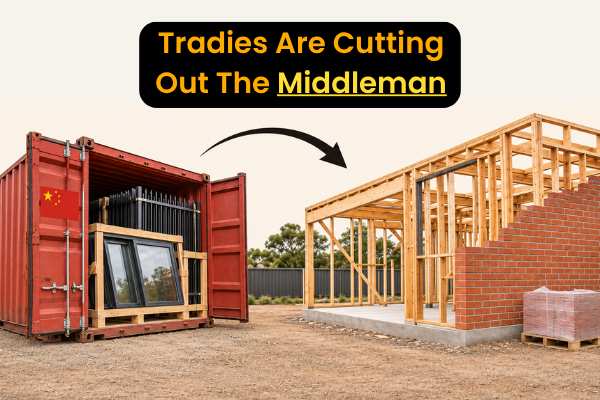
In his video, Hall says his Australian business has ordered US$20,000 worth of fencing products, filling a 40-foot container.
For anyone wondering how to import from China to Australia, his experience offers a look at the work involved before that first shipment arrives.
Hall says they started on Alibaba, sending out a request for quotes and checking that the products offered matched their specifications. They then hired a quality agent in China through Upwork to inspect factories and recommend suppliers.
After that, they flew over themselves, travelling to Beijing and Shanghai and visiting four shortlisted factories.
According to Hall, payment went through their quality agent, who charges a management fee and will inspect the goods during fabrication. An Australian freight forwarder is handling shipping through to their door.
“Get a good freight forwarder,” is his main piece of advice, pointing to the importance of getting shipping documents and product classifications right.
At the time of the video, this was their first order, with delivery still ahead. Hall doesn’t give an Australian price comparison or claim a particular percentage saving.
What his account does show is that going direct can involve building your own support network: someone to assess suppliers, someone to check production and someone to organise freight.
🏗️ “The Real Problem Is Why We Must”
For Mansour Building Services, the discussion comes with a longer history.
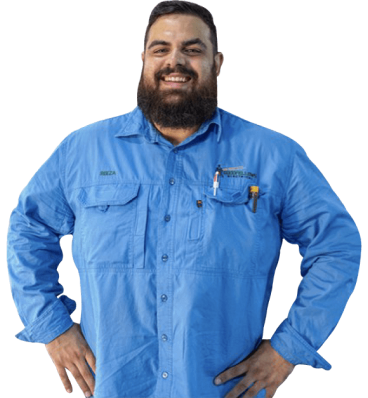
In his video, the Gavin Mansour says his business has been buying materials from China for well over 18 years, visiting factories across several provinces and sourcing different products.
His view on importing from China to Australia is that construction costs give builders and developers a strong reason to consider it.
“The real problem is why we must,” he says.
He describes entire areas specialising in particular industries: street after street of lighting businesses, huge shopping centres devoted to lights, and kilometres of factories handling stone and marble.
The scale, he argues, is difficult to appreciate until you’ve seen it yourself.
Windows are one example he gives of the potential price gap. Comparing local quotes with those from Chinese manufacturers already supplying Australia, he claims the difference can reach tens of thousands of dollars on a two-storey home. The video doesn’t provide a quote breakdown, but it helps explain why he sees overseas sourcing as commercially compelling.
He also points to bathroom pods that arrive virtually complete and prefabricated housing manufactured for the Australian market.
His criticism extends to successive Australian governments, which he blames for allowing local manufacturing to decline. That’s his assessment of the broader problem; his practical message to builders is about choosing carefully.
After years of sourcing, he says some of the best products he has purchased have come from China.
“But only after extensive research.”
He’s equally direct about the other end of the market: builders can get carried away by extremely low prices, and poor purchases can come back to bite them.
📋 What’s the Actual Saving When Importing Building Materials From China to Australia?
An attractive factory quote is the starting point. The more useful comparison is what it costs to get a suitable product delivered and ready to use.
Shipping from China to Australia is part of that calculation, alongside insurance, customs charges, GST, inspections, storage and any work needed to demonstrate compliance. Travel, agent fees and the time spent coordinating the order also matter.
Local suppliers provide services too, including holding stock and helping resolve problems. Going direct means deciding which tasks you can manage yourself and which you’ll pay someone else to handle.
In Preston Potts’ Yahoo News Australia report, Tradie shuns Australia for Chinese building products to save thousands: ‘Blown away’, HIA’s Simon Croft said imported materials were acceptable when assessed against the same regulatory requirements as Australian-made products. He also highlighted delivery costs, warranties and the potential expense of rectification.
The same report included a more encouraging assessment from La Trobe University’s Dr Toong-Khuan Chan: sourcing lower-cost materials that meet Australian standards can give builders a competitive advantage. He also pointed out that local manufacturers rely on overseas materials and components.
For a tradie weighing up an order, the question is whether the saving remains worthwhile after those costs and responsibilities are accounted for. A lower price becomes much more useful when the specifications, quality and support arrangements stack up too.
🏠 Can You Import Entire Modular Homes From China?
Yes, modular homes from China can be imported, but the finished home must meet the applicable National Construction Code requirements and relevant state or territory rules. Planning and building approvals depend on the project and location, so check the requirements with the relevant council and building certifier before committing. An overseas purchase doesn’t automatically come with permission to install or occupy it.
🤔 Is Going Direct Worth the Effort?
Josh Alcorn is checking factories against promising quotes. Adam Hall has put money into his first container. Gavin Mansour describes years of sourcing backed by extensive research.
Their experiences suggest direct importing deserves a closer look for businesses prepared to do the work. The potential savings are the attraction; finding the right manufacturer and getting the order right are what could make those savings worthwhile.
Before buying directly from China, businesses need sufficient capital, a clear understanding of the importing process and well defined product specifications and compliance requirements.
The videos reflect the speakers’ own experiences and views. Price comparisons are their claims and have not been independently verified by Tradiespace.
Sources: Instagram videos from Josh Alcorn, Adam Hall and Mansour Building Services, plus reporting by Preston Potts for Yahoo News Australia.